The Best Knife Sets for Home Kitchens: Why I Would Buy Three Knives Instead
Ad As an Amazon Associate I earn from qualifying purchases. How this works
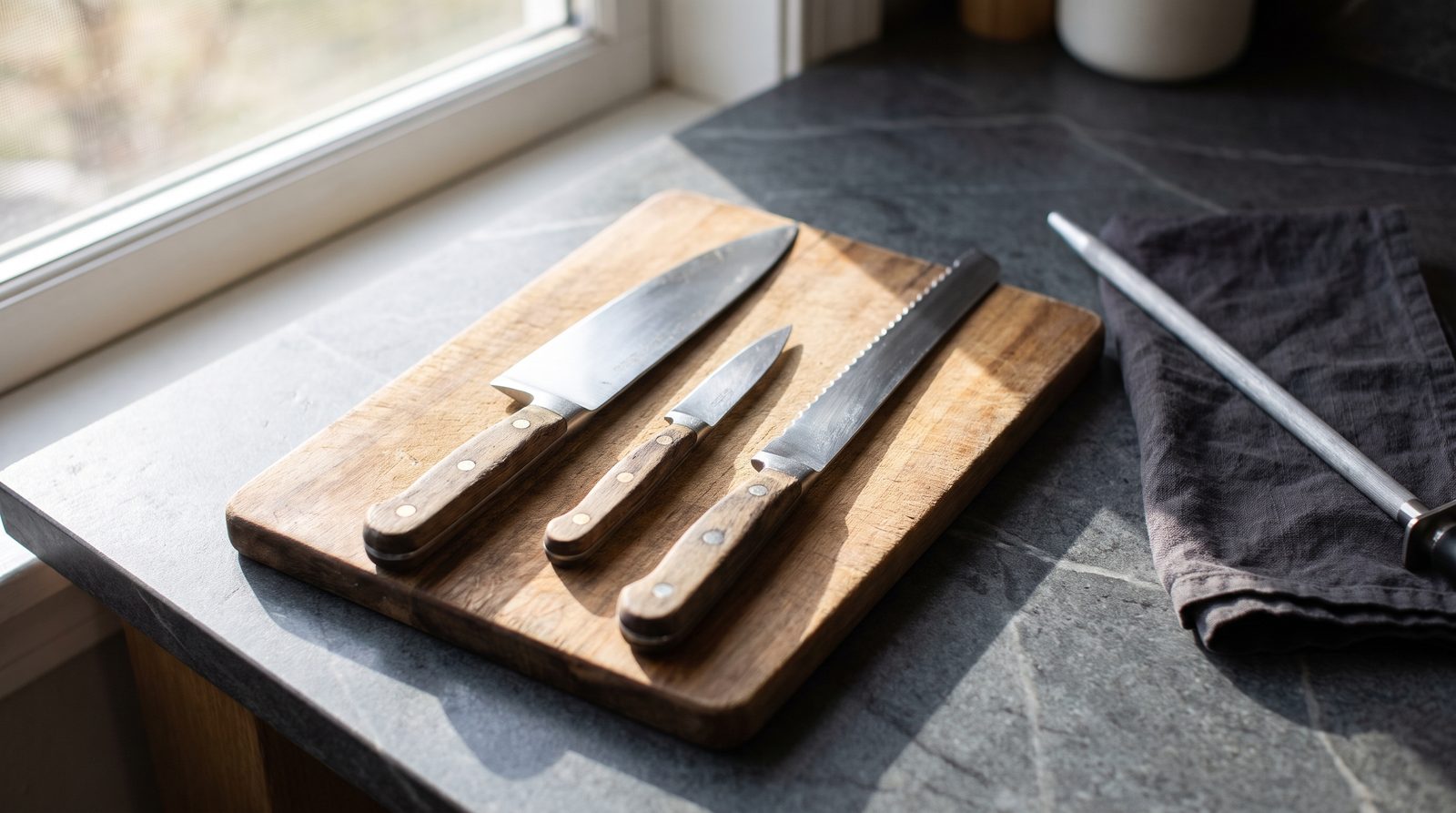
A knife set looks like the sensible way to buy knives. One box, one price, everything matching, and a block to stand it in. It is the most common kitchen present there is.
I have worked in professional kitchens for eight years and I have never once seen a knife block in one. There is a reason for that, and it is not snobbery about brands. It is that a set is priced as a set, and most of what is in the box is there to make the box look full.
What is actually wrong with sets
Look at a typical twelve-piece set. You get a chef's knife, a bread knife, a paring knife, a utility knife, a santoku, six steak knives and a pair of shears. The block takes up a corner of the worktop for the next decade.
In practice the chef's knife does most of the work, the paring knife does the small jobs and the bread knife does bread and tomatoes. The santoku overlaps the chef's knife almost entirely. The utility knife is too big for small work and too small for big work. The steak knives come out a few times a year.
So a set spreads your money across eleven blades when three of them will see daily use. Spend the same money on three good knives and each one is noticeably better in the hand.
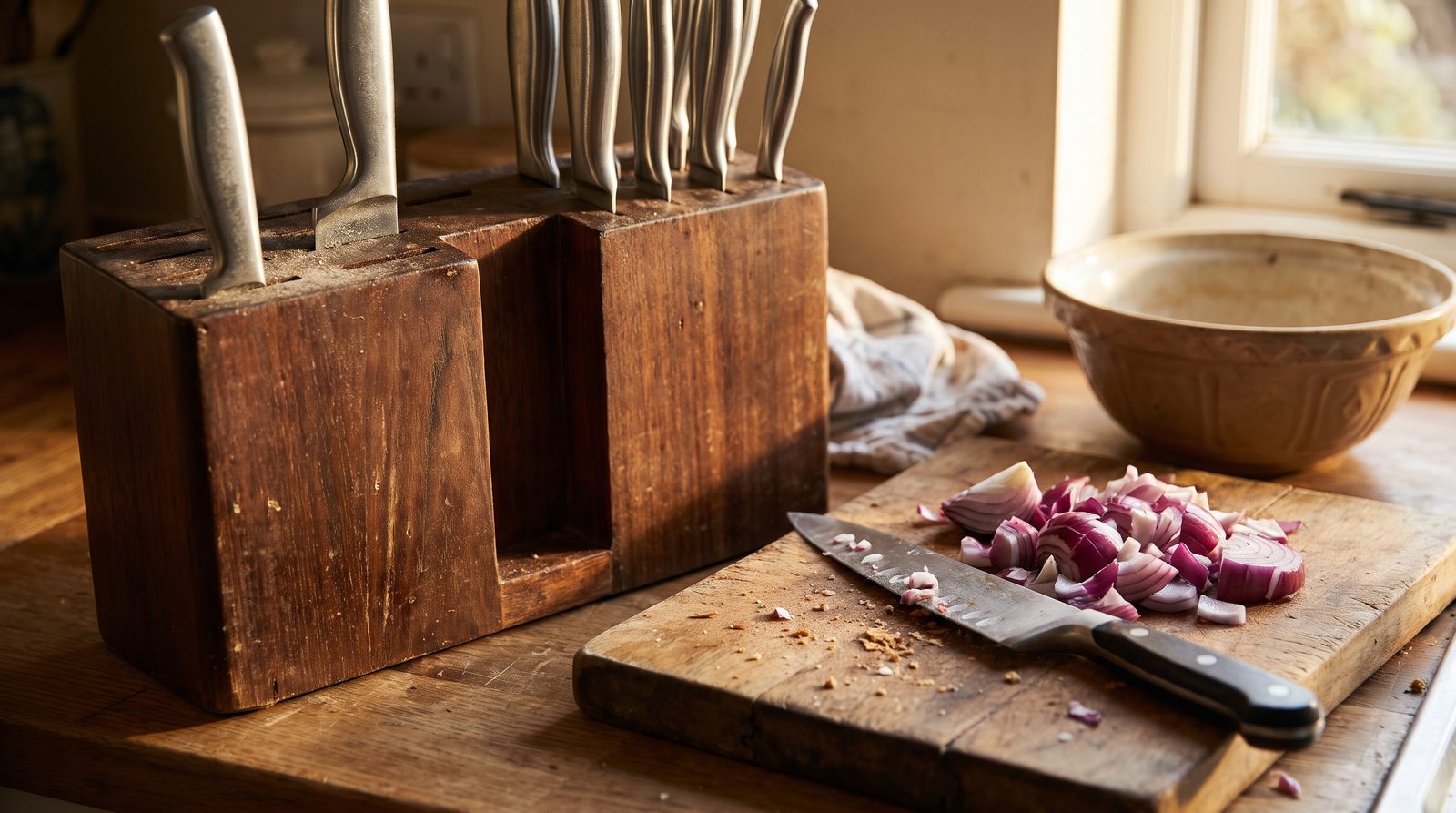
The second problem is the block itself. It holds blades edge-down against wood, it is awkward to clean properly, and it quietly encourages you to keep knives you never use because the slot would otherwise sit empty.
The chef's knife does most of the work
This is the one that matters. Chopping, slicing, dicing, breaking down a chicken, crushing garlic with the flat of the blade. If you only ever sharpen one knife, sharpen this one.
Twenty centimetres is the size most home cooks get on with. Twenty-five is a professional habit more than a necessity and feels enormous on a domestic board.
The Victorinox Fibrox Pro is the knife I have seen in more professional kitchens than any other, and it is not expensive. Swiss made, stamped rather than forged, with a textured non-slip handle that stays grippable with wet hands. It is dishwasher safe, though I would still wash it by hand. It is not a beautiful knife. It is a knife that works, holds a reasonable edge, sharpens easily and does not cost enough to make you precious about it.
Good for: almost everyone, and particularly a first proper knife.
Victorinox Fibrox Pro 8 inch chef's knife on Amazon
The paring knife does everything in your hand
Anything you do in your hand rather than on the board: trimming, peeling, coring, taking the eyes out of a potato, scoring fat on a joint. A short blade with no flex you cannot control.
This is the knife people most often own a bad version of, usually something that came free with a set. A decent one costs very little and makes small work quick instead of fiddly.
Good for: anyone whose small knife is blunt, which is most people.
Victorinox 3.25 inch paring knife on Amazon
The bread knife is not only for bread
A long serrated blade is also the right tool for a ripe tomato, a soft cake, a melon, and anything with a skin that resists a straight edge. It saws through without crushing what is underneath.
It is also the one knife in the kitchen that cannot easily be sharpened at home, because each scallop needs doing separately. So buy a decent one, use it for what it is good at, and expect it to last years rather than forever.
Good for: anyone who buys real bread, and anyone who has squashed a tomato this week.
Victorinox Fibrox 10.25 inch serrated bread knife on Amazon
What makes a knife good, and what does not
Three things matter and they are all boring.
The steel has to hold an edge. Soft steel goes blunt in a week. Very hard steel holds an edge brilliantly and chips if you look at it wrong. The middle of that range is what almost every good working knife uses.
The handle has to suit your hand. Not the photograph of the handle, your hand. A grip slightly too fat or too rounded will tire you out over a long prep session and make you less accurate.
The balance has to be right. Hold the knife in a pinch grip, thumb and forefinger on the blade just in front of the handle. It should sit there without wanting to tip forwards or back.
What matters far less than the marketing suggests: the number of layers in Damascus cladding, whether there is a bolster, and the weight. A heavy knife is not a better knife. It is a heavier knife.
The one thing more important than which knife you buy
A sharp cheap knife beats a blunt expensive one, every time, without exception. This is the part most people skip, and it undoes everything else.
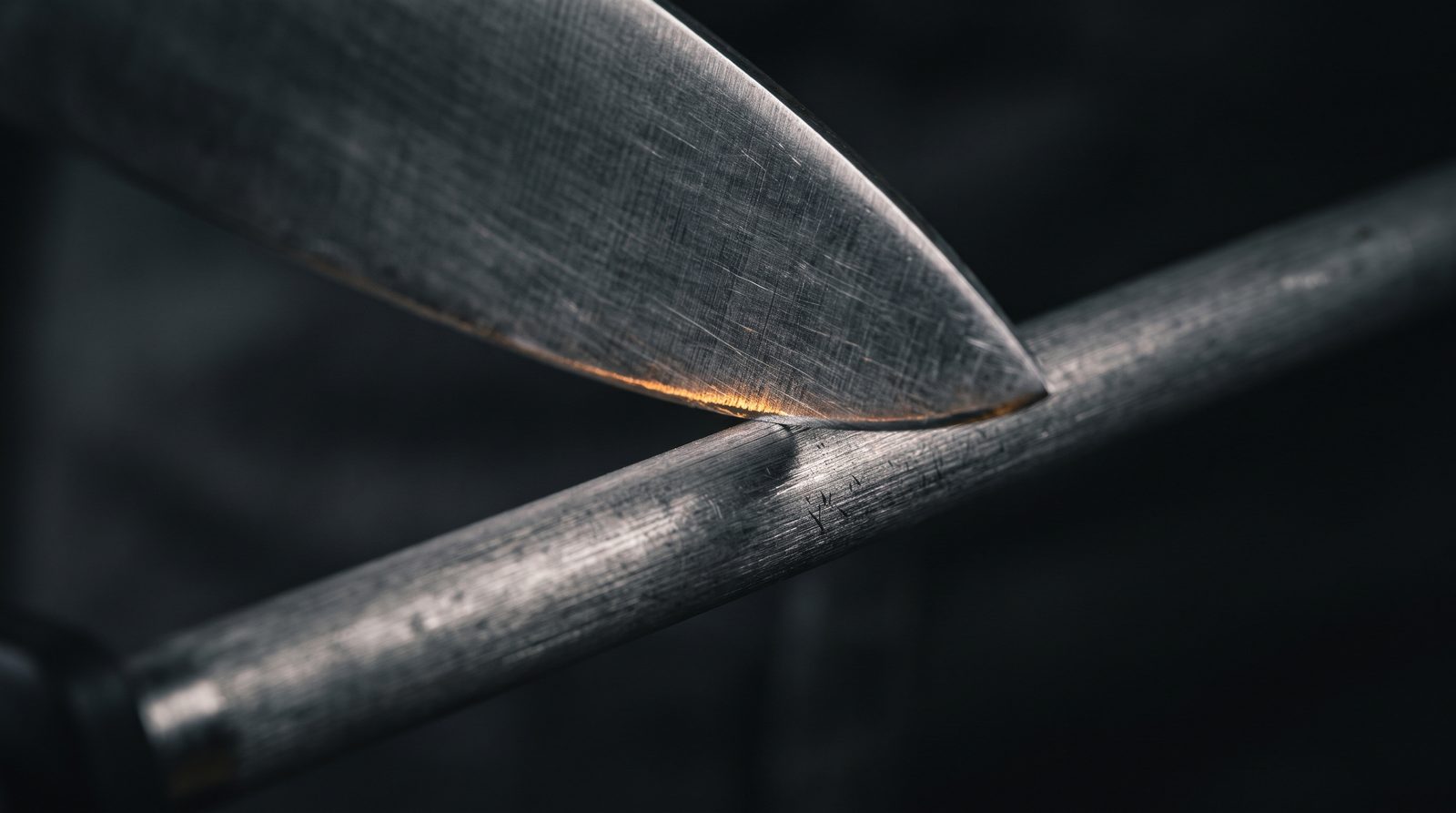
A honing steel does not sharpen. It straightens the edge, which rolls over microscopically every time you use the knife. A few passes before you start cooking keeps a sharp knife sharp for months, and it takes ten seconds.
Sharpening, meaning actually removing metal to form a new edge, is a separate job. Once or twice a year for a home cook. A whetstone if you want to learn, or a local sharpening service if you do not. Most towns have one and it costs very little.
Good for: everyone who owns a knife, which is everyone.
And the things that destroy an edge, in order: the dishwasher, a glass or stone chopping board, and leaving knives loose in a drawer to knock against each other. Wash by hand, dry straight away, cut on wood or plastic, and store them where the edges touch nothing.
When a set does make sense
Two cases, honestly.
If you are setting up a kitchen from nothing, a first flat or a rental you are furnishing, a cheap decent set gets you cooking today and the chef's knife can be replaced properly later. That is a reasonable thing to do.
And if the person you are buying for genuinely will not maintain knives, a mid-priced set with a block is more realistic than one good knife they will blunt and never sharpen. Buy for the cook you have, not the cook you wish you had.
What I would not buy at any price
Any set sold with self-sharpening slots in the block. They grind metal off your blades every time you put a knife away.
Sets with coloured non-stick coatings. The coating comes off into the food, and the steel underneath is usually the cheapest part of the knife.
Anything sold as a nineteen-piece set at a price that cannot possibly cover nineteen pieces of decent steel. Count what is in the box and divide.
Sources
As an Amazon Associate I earn from qualifying purchases. Links to products on this page are affiliate links; if you buy through them I may earn a small commission at no extra cost to you.