Cast iron pan: what it is and why I cook with one
The one pan I would keep if I could only keep one.
What it is
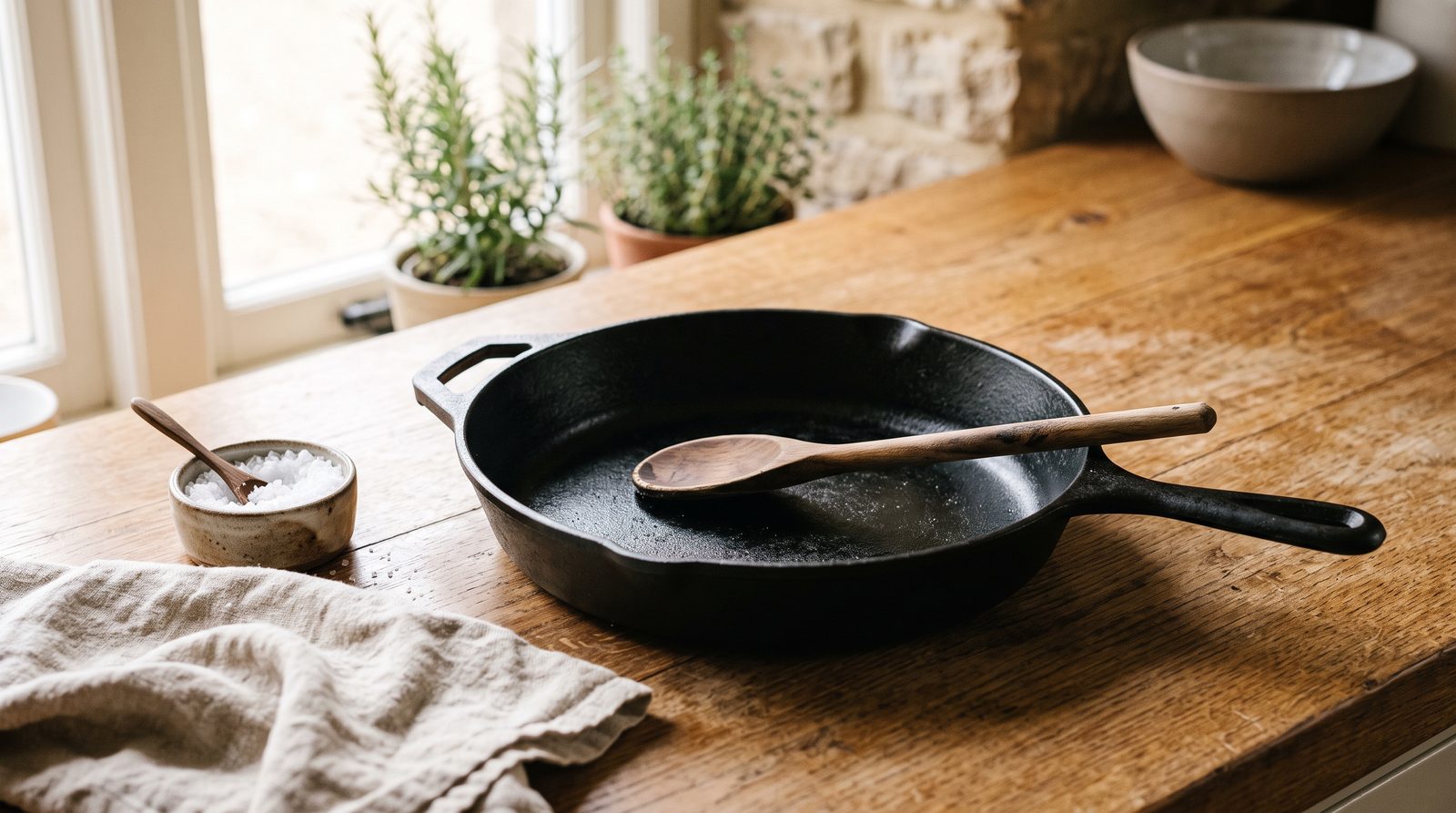
A cast iron pan is a single piece of iron poured into a mould. There is no coating to wear out and no plastic handle to melt. Lodge pans come pre-seasoned, which means the factory has baked on thin layers of vegetable oil so the surface is ready to cook on the day it arrives.
It is heavy, it heats slowly, and once it is hot it stays hot. That one trait is the whole reason to own it.
Why buy one
- It holds heat. Put a cold steak or a chicken thigh into a thin pan and the temperature drops, so the food steams. Cast iron barely flinches, so you get a proper brown crust.
- It goes from hob to oven. Start a dish on the stove and finish it in the oven in the same pan. Check the maker's guidance for the exact limits, and use a thick cloth for the handle, because it gets very hot.
- It lasts. Looked after, a cast iron pan can be used for decades and handed on. A scratched non-stick pan has to be replaced; a rusty or sticky iron pan can be cleaned and re-seasoned.
- It is cheap to keep. No special products are needed: hot water, a brush, a cloth and a little oil.
- It works on most heat sources. Gas, electric, ceramic and oven are fine. For induction, check your hob's manual and lift the pan rather than dragging it, as the rough base can scratch glass.
Why it suits low-carb and keto cooking
Keto cooking leans on fats, eggs, meat, fish and vegetables, and nearly all of that tastes better when it is browned. Skin-on chicken thighs, salmon, steak, sausages, halloumi, bacon, mushrooms and courgette slices all sear well in iron. Because the pan does the browning, you need no flour, sugar or sauce from a jar to get flavour.
What to know before you buy
- It is heavy. Pick it up in a shop if you can. A full pan of food can be awkward for some wrists.
- It needs a little care. Not much, but you cannot leave it in the sink overnight.
- It reacts with acid. Long simmers of tomato, wine or lemon can strip seasoning and give a metallic taste. A quick pan sauce is fine.
- Size matters. A pan that is too small crowds the food. Check the diameter on the product page and think about how many people you cook for.
How to look after it
- Heat it before you add oil. Give it a few minutes on a medium heat. Add the oil, then the food.
- Clean it while it is still warm. Hot water and a brush or a non-scratch scourer. A little mild soap will not ruin a seasoned pan, but do not scrub hard.
- Dry it at once. Wipe it, then put it on a low heat for a minute so every drop of water goes.
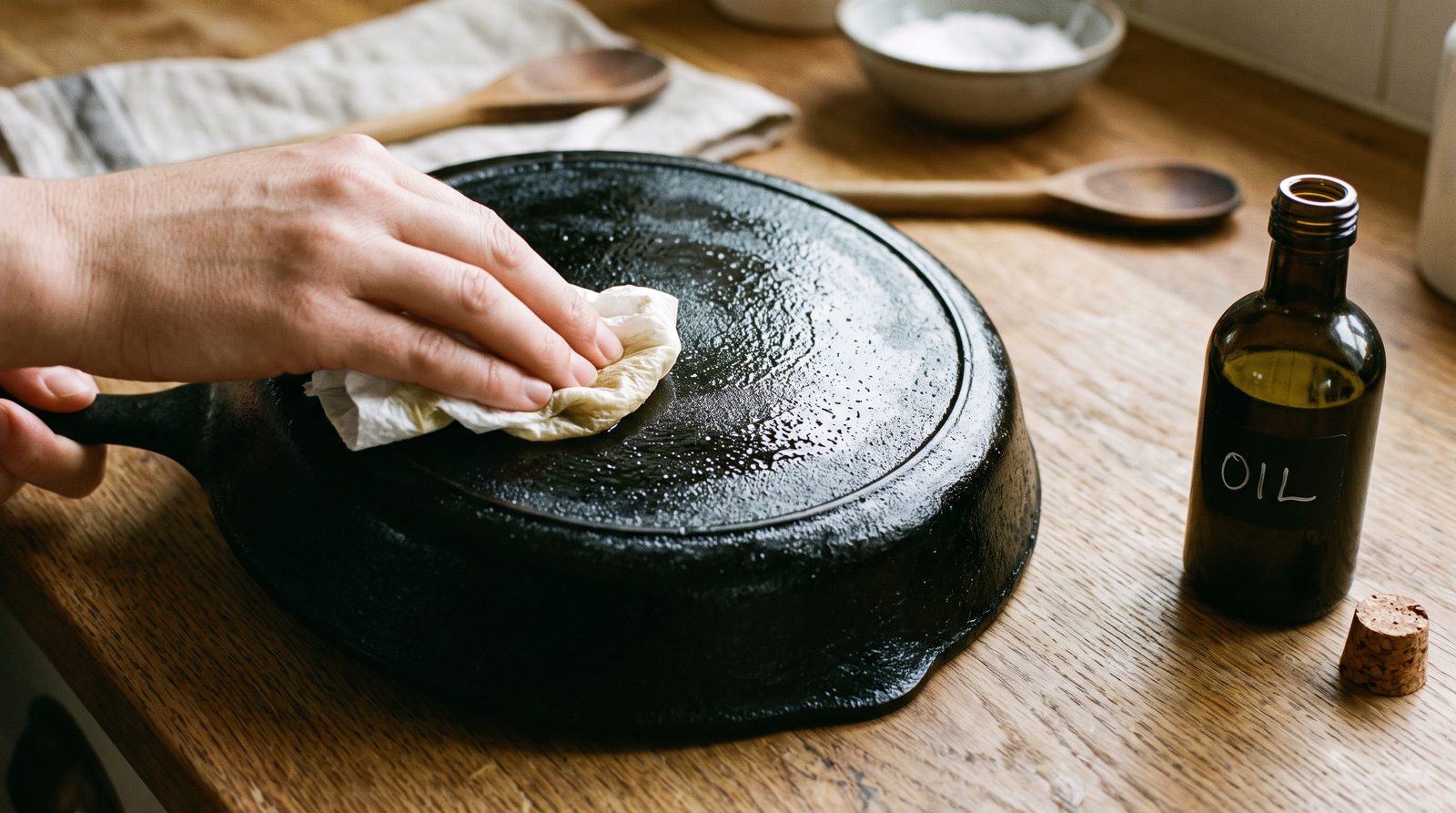
- Oil it lightly. A few drops of a neutral oil, wiped over the inside until it looks barely shiny. Too much oil turns sticky.
- Store it dry. If you stack pans, put a sheet of kitchen paper between them.
If it ever rusts, scrub the rust off, wash, dry, rub on a thin layer of oil and bake it upside down in a hot oven for about an hour with a tray underneath. It will recover.
Five things to cook in it first
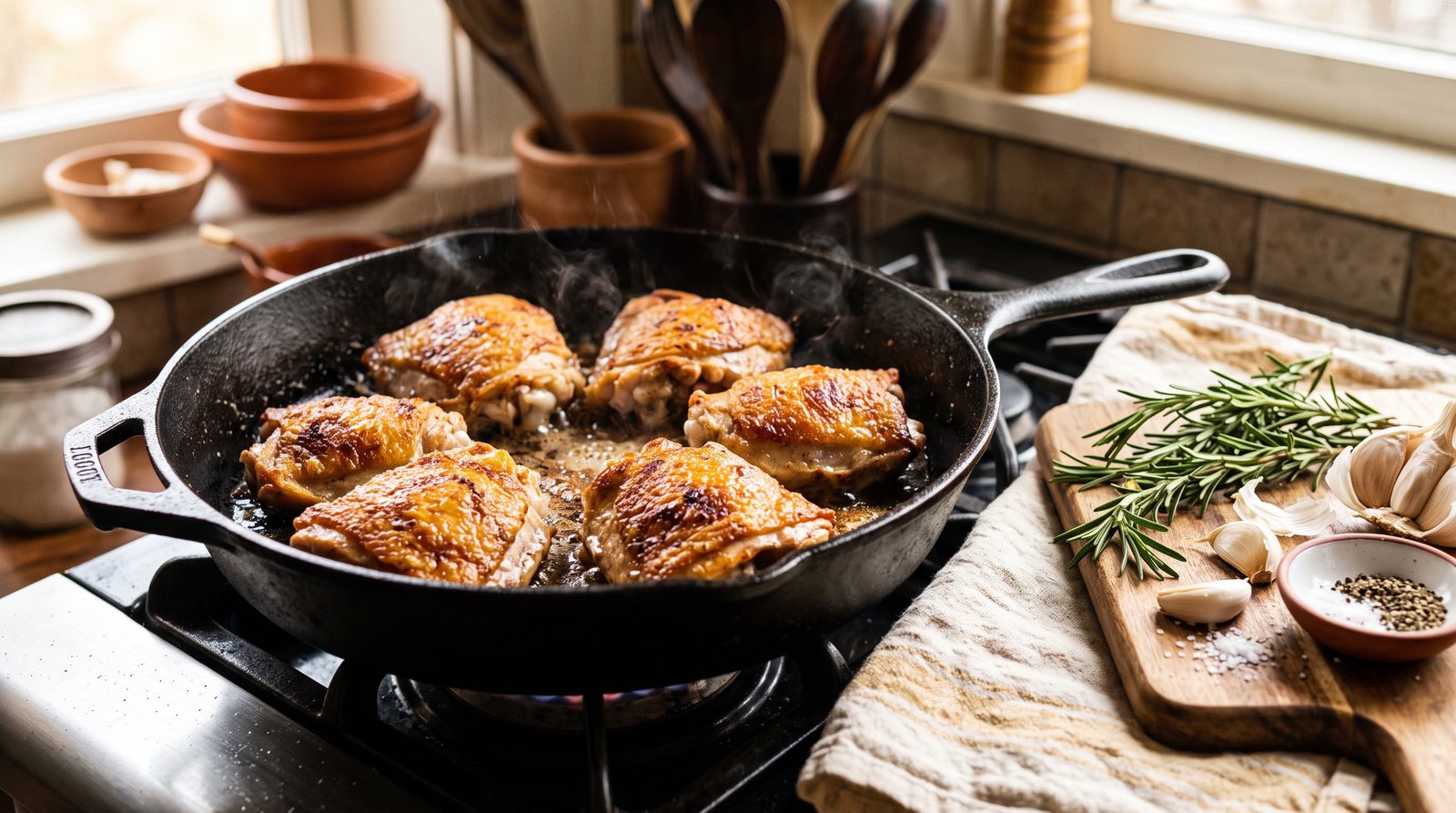
- Seared chicken thighs, skin down, until the skin is deep gold.
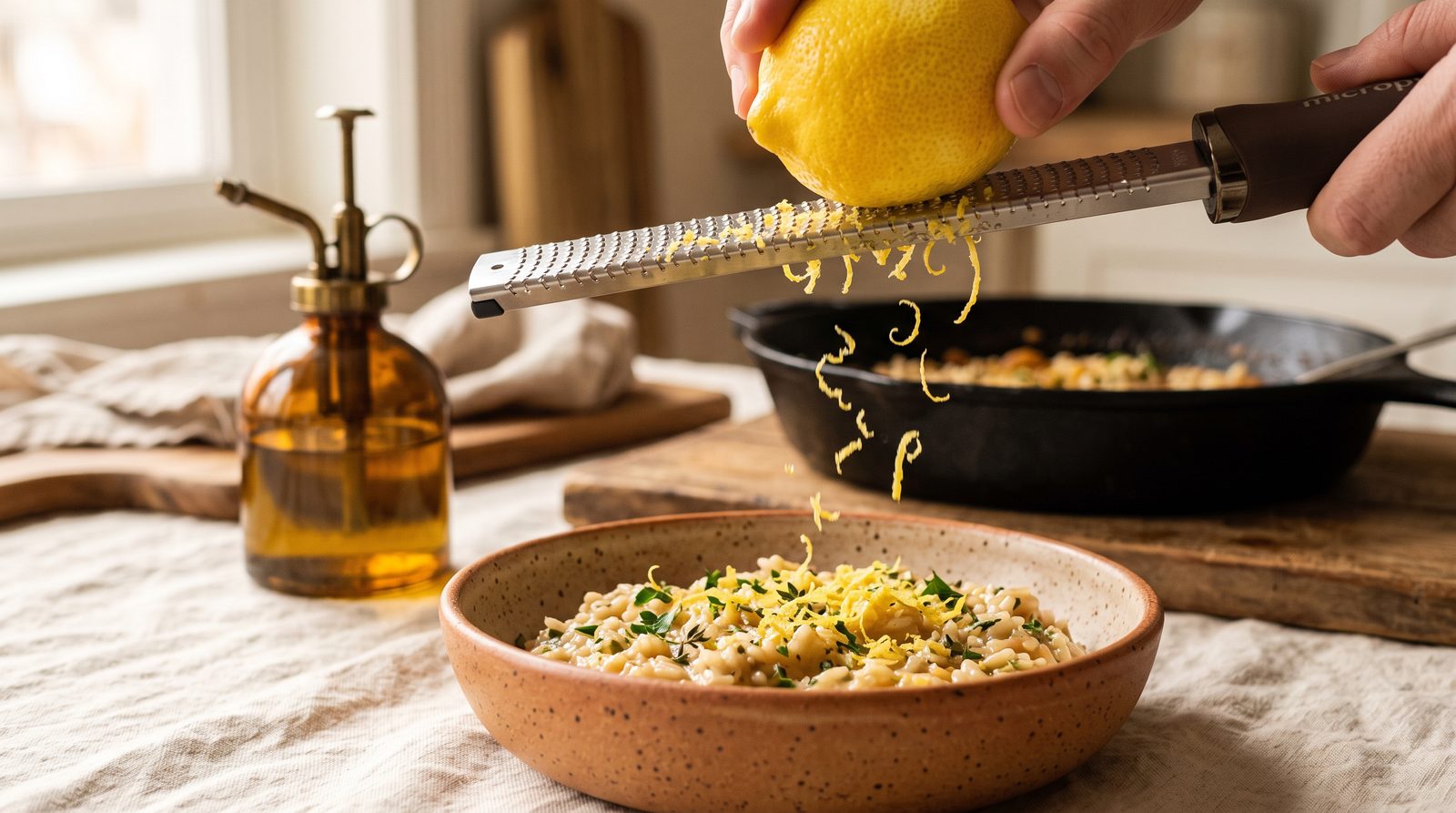
- Lemon garlic butter salmon.
- Crispy skin chicken thighs finished in the oven.
- Mushrooms in butter with thyme, cooked in a single layer.
- A thick steak, rested properly. See resting meat.
Lodge cast iron pan
Check the sizes, current price and reviews on the Amazon page. The link below is the pan I use.
View on Amazon UKGear I use in this kitchen
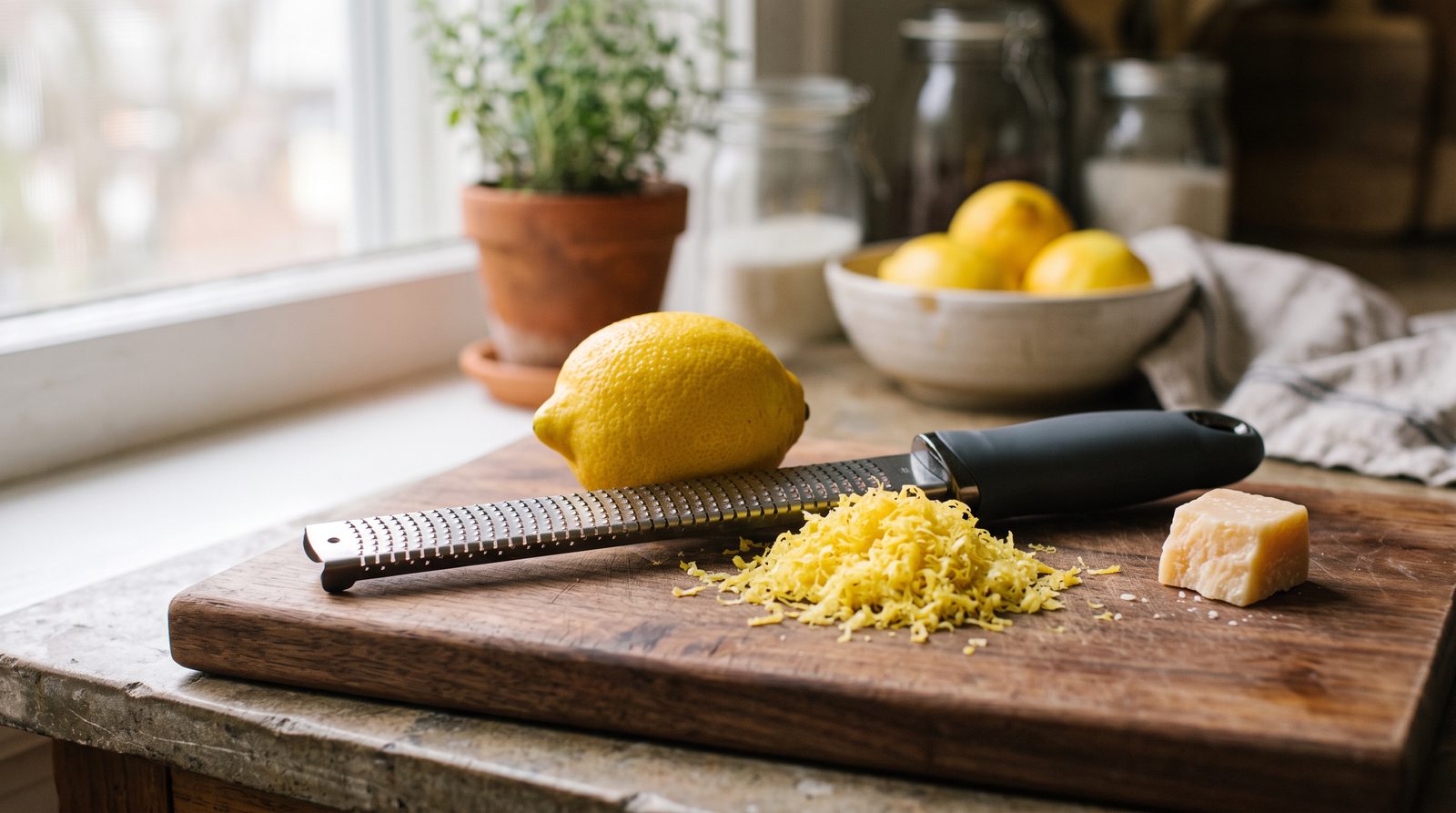
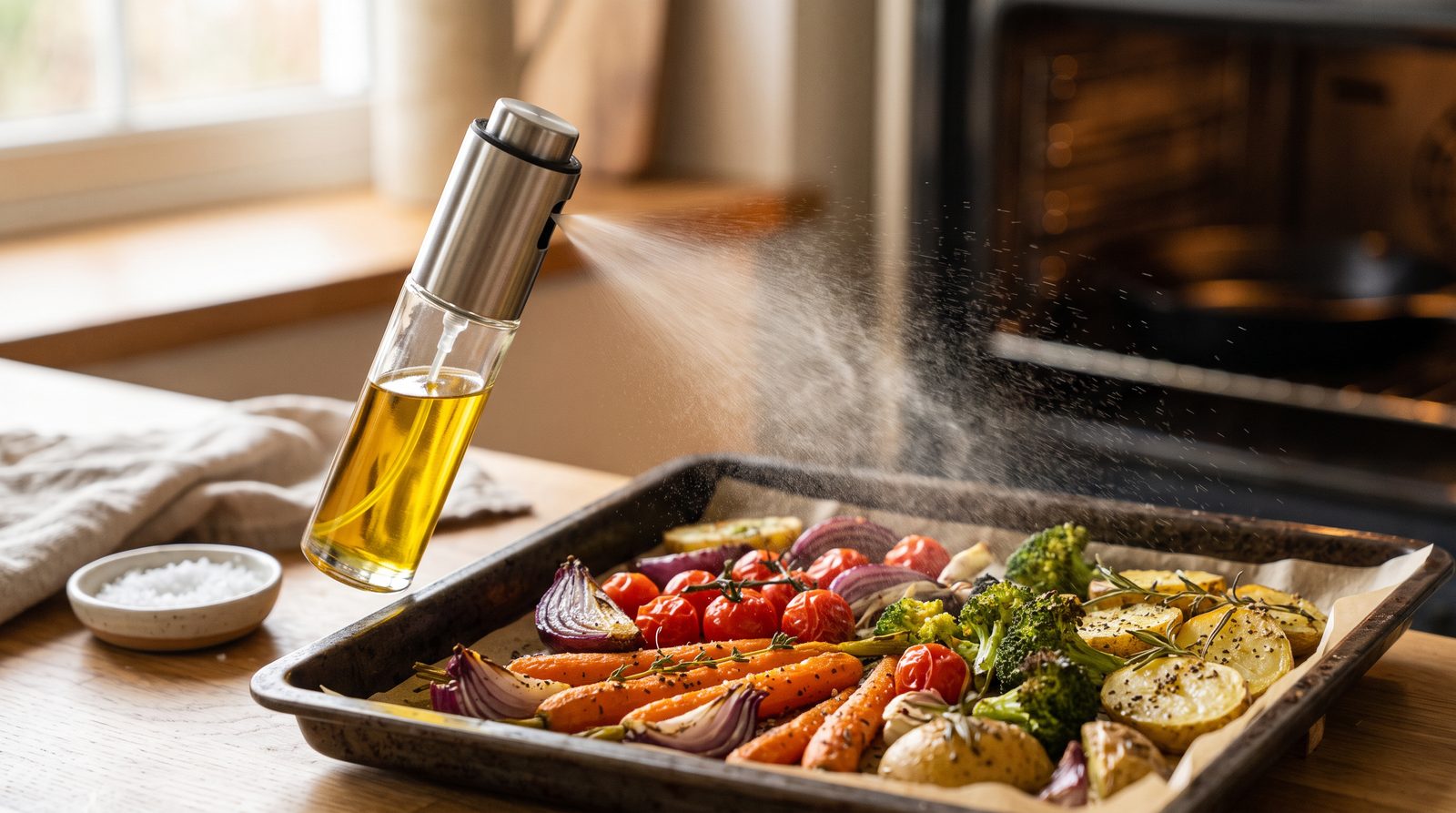
Three simple tools behind most of the recipes here. Amazon Associate links.
Keep reading
As an Amazon Associate I earn from qualifying purchases. Links to products here may be affiliate links; if you buy through them I may earn a small commission at no extra cost to you.