How Cold Should Your Fridge Be? A 15-Minute Reset
NEW · by Chef Niko Tests
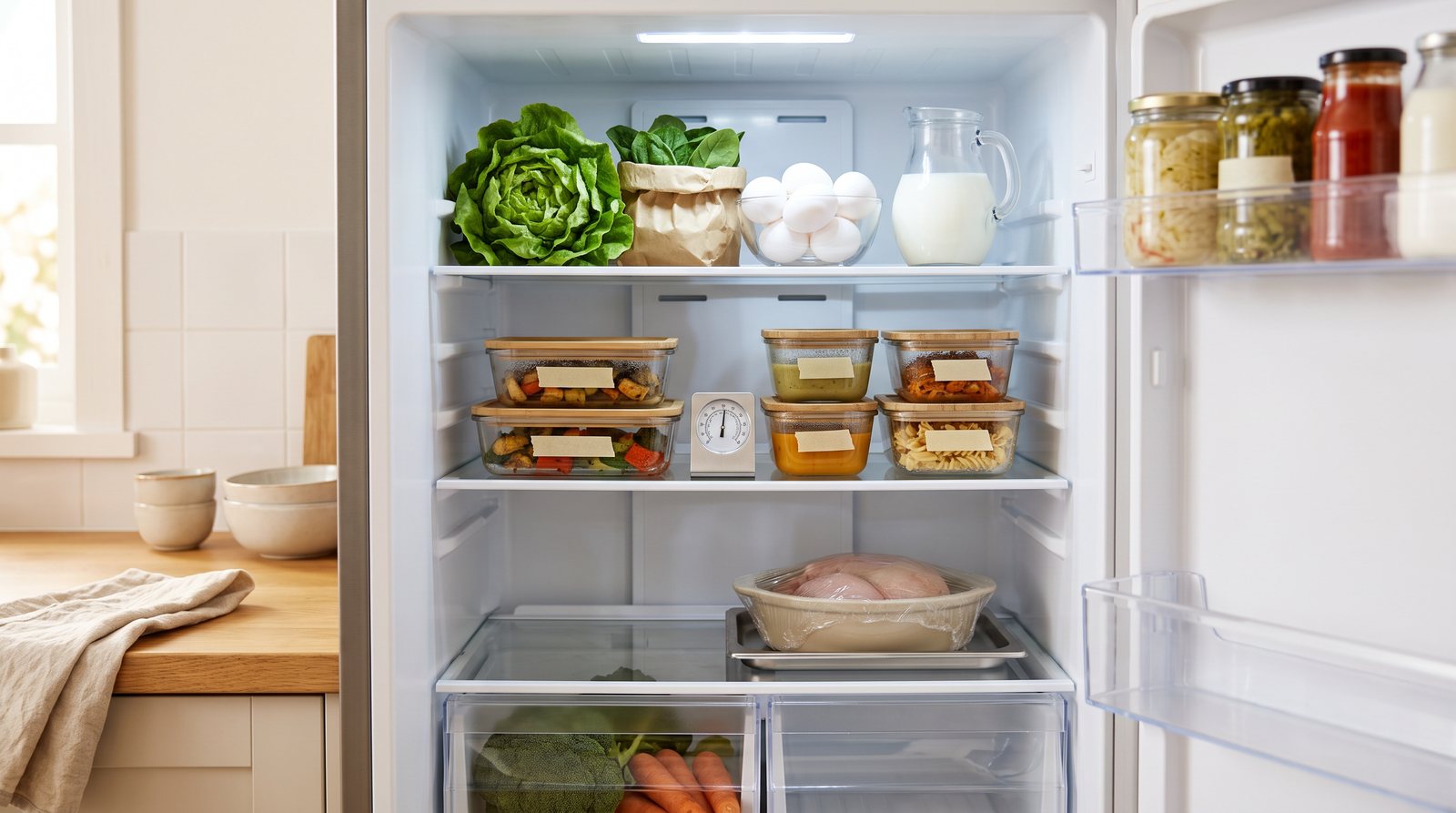
Your fridge works every hour of the day, and most of us never check what it is actually doing. A short Friday reset means you start the weekend knowing what you have, what needs eating first and where everything lives.
Hello, it's Markoni, the friend in chef Niko's kitchen. Here is a simple routine in five small steps. Set a timer for 15 minutes and see how far you get.
Step 1: Check how cold it really is
The Food Standards Agency (FSA) says your fridge should be kept at 5°C or below. The dial inside only sets how hard the fridge works, so it does not tell you the actual temperature. A cheap fridge thermometer on the middle shelf does. If the number is above 5°C, set the dial to a colder setting (check your fridge's manual, as the numbers work differently on different models) and check again the next day.
Step 2: Pull everything forward and check dates
Take everything off each shelf and look at it. Anything past its use-by date goes in the bin, because the FSA is clear that food should not be eaten after its use-by date, even if it looks and smells fine.
Then look at the leftovers. The FSA advises eating leftovers within two days, or freezing them. If something is close to that limit, decide now what you will do with it this weekend.
Step 3: Re-stack by zone
A fridge works best with a simple logic, a bit like stations in a professional kitchen.
- Raw meat, poultry and fish on the bottom shelf, covered or in sealed containers, so nothing can drip onto other food.
- Cooked and ready-to-eat food above it, away from anything raw.
- Like with like. Keep similar foods together, for example dairy in one place, leftovers in another and things for packed lunches in a third. They are easier to find and less likely to get lost at the back.
Step 4: Label and date
In professional kitchens everything that goes into a fridge or freezer is labelled with what it is and the date it was made. Nobody has to guess. You can do the same at home with a strip of masking tape and a marker kept in a drawer near the fridge. Write the name and the date on every leftover and every prepped ingredient.
Cool cooked food before storing it. The FSA suggests getting it into the fridge or freezer within one to two hours, and splitting a big batch into smaller portions helps it cool faster.
Step 5: Plan one "use-it-up" meal
Look at what you found in Steps 2 and 3. Pick one meal for the weekend that uses up whatever needs to be eaten first. Write it on a note on the fridge door. You start the week with a clear shelf and less to throw away.
Try it yourself
Today, find out your fridge temperature. Put a thermometer on the middle shelf, read it tomorrow morning and write the number on a sticky note on the door. If it is above 5°C, adjust the dial a little and check again the next day.
Next up
Tomorrow: a quick kitchen tip you can save and use tonight.
Sources
https://www.food.gov.uk/safety-hygiene/how-to-chill-freeze-and-defrost-food-safely