Why Roast Potatoes Go Soggy (It's the Tray, Not the Oven)
Ad As an Amazon Associate I earn from qualifying purchases. How this works
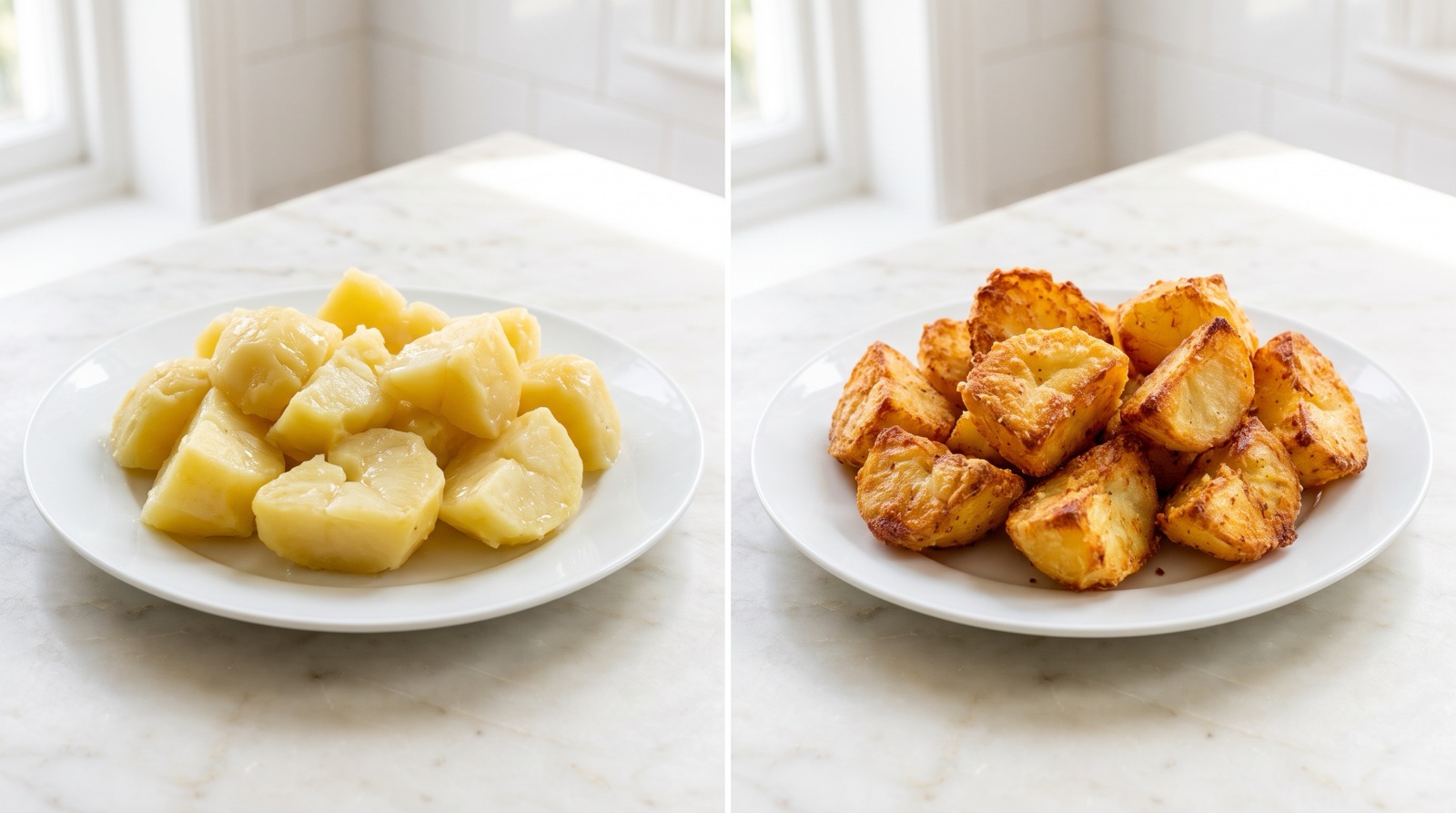
Most people blame the oven when their roast potatoes come out pale and soft. In my experience the cause is nearly always the tray and what is on it: steam.
What actually happens
As the potatoes heat up, water comes out of them as steam. For the surface to brown and crisp, that steam has to leave quickly. On an open tray with space around every piece, it does. On a crowded one, the pieces sit in a cloud of their own steam and the surface stays soft.
Three things that cause soggy potatoes
- Wet potatoes. Water on the surface has to boil off before browning can start. Pat them dry with a towel after cutting or boiling.
- A tray that is too small. If the pieces touch or pile up, the steam is trapped. Leave about 1 cm (½ in) between pieces.
- A deep dish. A roasting tin with high sides holds steam in. A flat, wide tray lets it escape.
When to use two trays
A half sheet pan (46 × 33 cm / 18 × 13 in) holds about 900 g (2 lb) of potato cubes in a single layer. Above that, split them across two trays and swap the trays between oven shelves halfway through. Chef Niko recommends a Nordic Ware half sheet pan for this kind of roasting.
Nordic Ware half sheet pan
Try it tonight
Spread your potatoes in one layer on a wide tray at 220°C / 425°F, with space around every piece. The Crispy Sausage & Potato Traybake uses the same rule: one layer, gaps, and the liquid in a corner.
Was this helpful?
Your answer tells Chef Niko what to fix and what to write next.
No name, no email, no cookies. What we keep.
As an Amazon Associate I earn from qualifying purchases. Links to products on this page are affiliate links; if you buy through them I may earn a small commission at no extra cost to you. It helps the channel grow. Thank you so much for your support.
Cooking the whole meal? See the Thanksgiving dinner guide: turkey, gravy, sides and timing.