How to Keep Turkey Juicy (Stop It Drying Out)
Ad As an Amazon Associate I earn from qualifying purchases. How this works
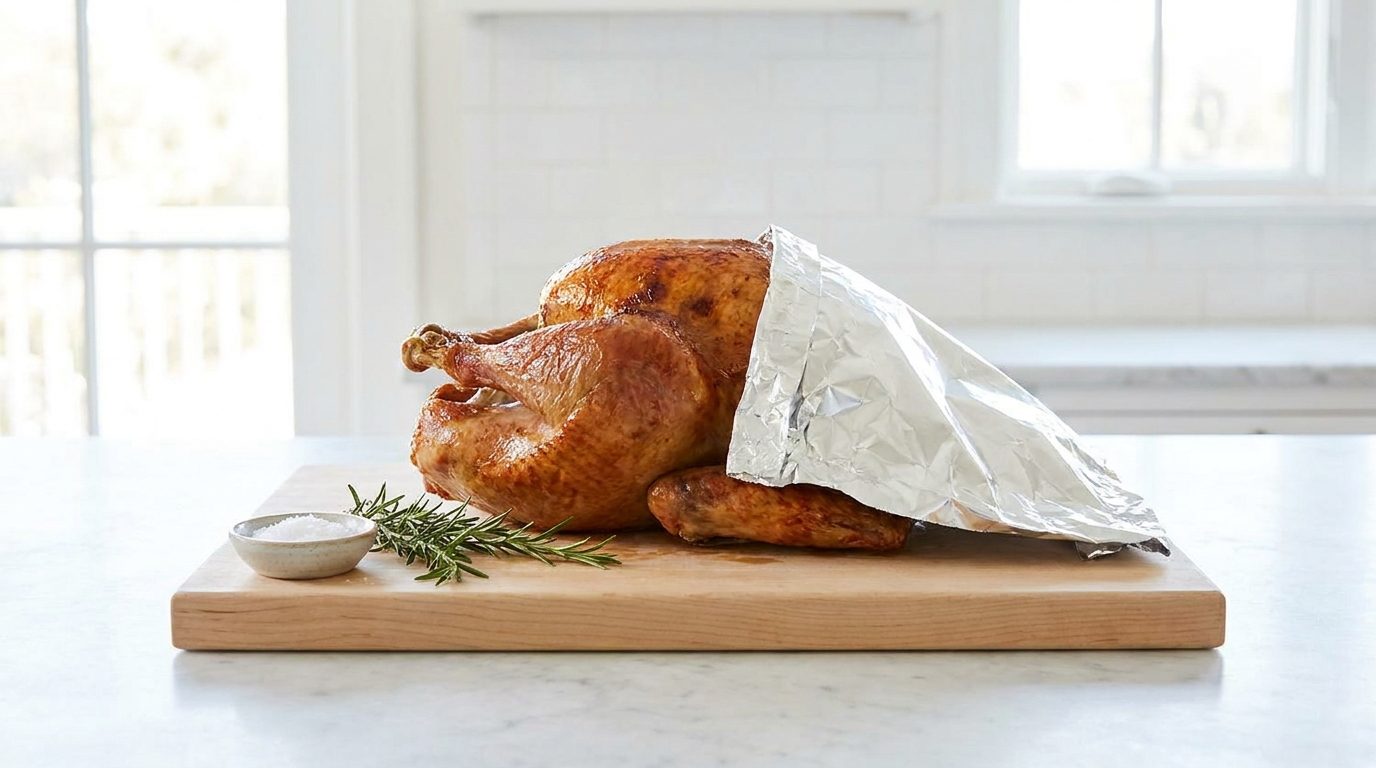
Dry turkey is not bad luck. It is a timing problem with a few predictable causes, and every one of them has a fix you can make before the bird goes in the oven.
Plan the whole day with the Christmas Dinner Timeline: tell it when you want to eat and it works back minute by minute.
The breast and the legs want different temperatures, and the breast is the part that suffers. Almost everything below is about not letting it overshoot.
What goes wrong, and what fixes it
| What you see | Why it happens | The fix |
|---|---|---|
| Dry, stringy breast | The breast cooked past its finish while the legs caught up | Start checking early and take it out as soon as it reaches 75°C / 167°F |
| Pale, tough skin | Wet skin steams instead of browning | Pat dry, then leave it uncovered in the fridge overnight |
| Bland meat, even when juicy | Salt only sits on the surface | Dry brine the day before |
| Juices pour out on the board | Carved too early, while the meat is still tight | Rest 30–40 minutes before carving |
| Legs still pink at the bone, breast done | Legs need longer than the breast | Check the thigh and the breast separately, and trust the lower reading |
Dry brine, the day before
Rub the whole bird all over with fine salt: about 10 g per kilo, or roughly 1½ teaspoons per 2 lb. Put it uncovered on a tray in the fridge for 24 to 48 hours.
The salt pulls moisture out, dissolves in it, and is drawn back into the meat. The result is seasoned all the way through and better at holding on to its juices as it cooks. The dry surface is a bonus: it is why the skin goes crisp instead of leathery.
Do not wash the bird. Pat it dry and leave it alone.
Cook to temperature, not to the clock
Minutes per kilo are an estimate. A thermometer is the answer. Take the bird out at 75°C / 167°F in the thickest part. That is the standard safe temperature for poultry.
Probe the thickest part of the thigh from the side, angled in, stopping short of the bone. Then check the breast. If the two disagree, the lower number is the one that counts.
For timing and the weight-based plan, put your bird into the Chef's Roast Calculator.
Two things that help, and two that do not
Help: cutting out the backbone and flattening the turkey (spatchcock) so the breast and legs cook at the same pace, and keeping the oven door shut. Every time you open it the oven loses heat and the cook time stretches.
Do not help: basting, which wets the skin and costs you oven heat, and expecting butter to soak into the meat. Rub herb butter all over the outside instead: it browns the skin and bastes the breast as it roasts, but the juiciness itself comes from the right temperature and the rest.
When it still goes wrong
If the breast has dried out, slice it thin, lay it in a warm dish, and pour over hot stock or the pan juices. It will not be perfect, but it will be eaten. Better: do the fixes above next time, and keep the thermometer in reach.
Was this helpful?
Your answer tells Chef Niko what to fix and what to write next.
No name, no email, no cookies. What we keep.
Cooking for a smaller table? Try the herb butter turkey crown recipe, with timings for a small table. For the roast itself, see the heavy roasting pan with a rack Chef Niko recommends.
Cooking the whole meal? See the Thanksgiving dinner guide: turkey, gravy, sides and timing.