Glass vs Metal Baking Dish: Which One and When
Ad As an Amazon Associate I earn from qualifying purchases. How this works
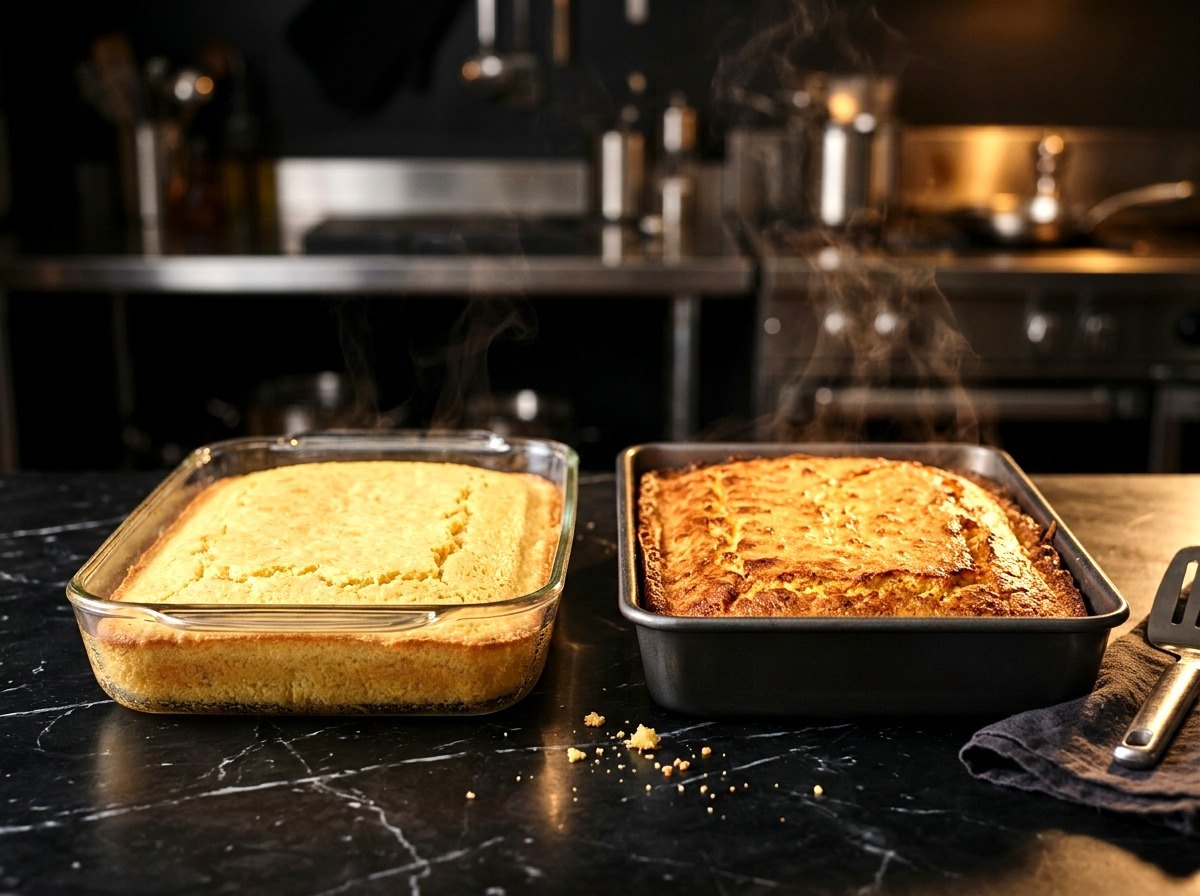
Same batter, same oven, same time. One comes out pale and soft, the other golden with crisp edges. The only difference is the dish. Here is what each one is good at, and when to turn the oven down.
What happens in the oven
- Metal is a good conductor. It passes the oven heat into the food almost straight away, so the bottom and sides start browning early. A dark metal tin browns even more than a light one.
- Glass is a poor conductor, but it stores heat. It takes longer to warm up, then it holds a lot of heat and keeps passing it into the food, even after the dish comes out of the oven.
- Glass lets you see. You can check the bottom and sides of a casserole or a pie without lifting anything.
Which dish for which job
- Metal: cakes, brownies, cornbread, traybakes, cookies, roast potatoes and roast vegetables, Yorkshire puddings. Anything that needs fast heat and colour.
- Glass: green bean casserole, sweet potato casserole, mac and cheese, lasagna, gratins, cobblers, bread pudding. Anything with a sauce that you serve from the dish.
- Either: a casserole works in metal too. It just bubbles a few minutes sooner, so start checking earlier.
The 15°C / 25°F rule
The rule is for baking: batters and doughs that need to set evenly, like cakes, brownies, bars and quick breads. In glass, the outside holds so much heat that the edges overbake before the centre is set. Lower the oven by 15°C / 25°F (so 180°C becomes 165°C, 350°F becomes 325°F) and check early.
For casseroles and gratins you do not need to change the temperature. The sauce does not "set" like a cake, and a little extra time is fine. Glass may need 5–10 minutes longer than metal to bubble at the edges.
How to look after a glass dish
- No sudden changes of temperature. Do not take a glass dish from the fridge or freezer straight into a hot oven. Let it stand 30 minutes at room temperature first.
- Do not put a hot glass dish on a wet or cold surface. Put it on a dry board, a towel or a rack.
- Do not pour cold liquid into a hot glass dish. Add the liquid before it goes in the oven.
- No hob and no grill. Glass bakeware is for the oven, not the stovetop or directly under the grill (broiler).
Why it works: the chef's reasoning
Colour comes from heat at the surface. Browning starts when the outside of the food gets hot and dry. Metal gets it there fast, which is why the metal-tin cornbread has a crust and the glass one does not.
Heat that stays is heat you can serve. In a restaurant a gratin goes from the oven to the pass in its dish. Glass and ceramic keep it hot on the way to the table. That is exactly what you want for Thanksgiving and Christmas sides.
One recipe, two dishes, two results. This is why recipes say "in a 9 × 13-inch metal tin" or "in a glass dish". Change the dish and you change the timing, so look at the food, not just the clock.
Try it with the green bean casserole from scratch, or see the glass baking dish Chef Niko recommends.
Was this helpful?
Your answer tells Chef Niko what to fix and what to write next.
No name, no email, no cookies. What we keep.